
Introduction
Quality and speed of shipping projects are two core metrics for evaluating performance of engineering teams. Projects typically go through multiple phases like research, requirements gathering, solution design, and implementation, each of which depends on a clear understanding of teams’ software architecture. Engineers who use architecture diagrams can accelerate most of these phases (if not all) when applied effectively.
Regardless of the diagram choice, C4 Model, UML diagrams (Sequence, Activity), or cloud-specific like AWS diagrams, the goal is the same: to build shared architectural knowledge and avoid accidental complexity. This makes collaboration easier for teams when they start referencing these diagrams during whiteboarding sessions, design reviews, and documentation.
Here are four reasons engineers should use architecture diagrams:
- Establish a common baseline for discussing systems
- Reduce review time and cognitive load
- Enable asynchronous communication
- Build a documentation-first culture
Let’s go through each one.
1. Common baseline for discussing systems
Engineers are frequently asked to weigh in on product ideas and feature proposals from upstream management. Some proposals are application-specific, requiring developers to scope and implement solutions programmatically, while others are more infrastructure-specific, requiring architects to consider the knock-on effects of the architectural changes.
Architecture diagrams serve as living documentation of their systems. When kept up to date, engineers can discuss new ideas with their trade-offs and make key decisions to confidently go from design to implementation. On the flip side, introducing changes without sufficient context can create a functional risk (i.e., break systems) and/or data vulnerabilities. For example:
- Deploying a message queue (SQS) in a public subnet with disabled encryption (data risk)
- Adding a cache in front of a service (inconsistent data risk)
- Deprecating a microservice with downstream dependencies (potential cascade failures)
All of which can be avoided if all engineers share the same knowledge baseline for discussing systems.
Generally speaking, architectural diagrams typically capture three elements: (1) data flow, (2) data storage, and (3) data processing. These elements help reviewers understand how a proposed change fits into the system and its potential downstream impact. For example, when introducing a new microservice, reviewers might ask:
- Data flow: What are its fan-in and fan-out dependencies?
- Storage: Is the service stateless or stateful, and where is its data stored?
- Processing: What does the service produce, and how is its data modeled?
Sharing a common understanding of how and why the architecture is designed makes collaboration as an engineer much easier.
2. Reduce review time and cognitive load
This can be helpful in code reviews. Referencing diagrams in a pull request (PRs) shows that the author has considered the architectural implications of their changes. This provides reviewers with context to:
- Explain the expected behaviour when the change is deployed (e.g., extra SQL queries to the core database, potentially added latency to the service).
- Ensure the author has thought about higher-level system interactions (e.g., number of connections to the core database).
Reviewers can then evaluate changes without mentally reconstructing the entire system. This reduces back-and-forth questions in PRs like “How does this affect X?” or “Have you thought about Y?”.
Architecture diagrams are particularly important for platform teams managing infrastructure-as-code (IaC) repos. Diagrams are critical in these scenarios because code/configuration changes often alter the current architecture, using tools like Terraform or CloudFormation. For example:
- Deploying a new application within a private subnet.
- Provisioning a new Kafka with new consumers.
- Configuring apps to call a new third-party API.
These examples highlight the importance of (A) a shared architectural baseline among engineers, reducing the need for repeated explanations (especially in PRs), and (B) minimising cognitive load by referencing diagrams instead of re-drawing parts of the architecture.
3. Encourage asynchronous communication
One common mistake in team collaboration is relying on a single engineer who holds architectural knowledge, repeatedly asking them questions via Slack or 1:1 meetings. This synchronous communication creates a knowledge bottleneck and a single point of failure, especially when that engineer is on PTO or leaves the company.
A better approach is documenting infrastructure knowledge in ADRs (Architecture Decision Records) and architecture diagrams. Engineers can revisit these documents at any time, leave comments or ask questions asynchronously, and not be blocked by a single person. This empowers teams to make design decisions independently and reduces dependency on individual engineers.
4. Documentation-first culture
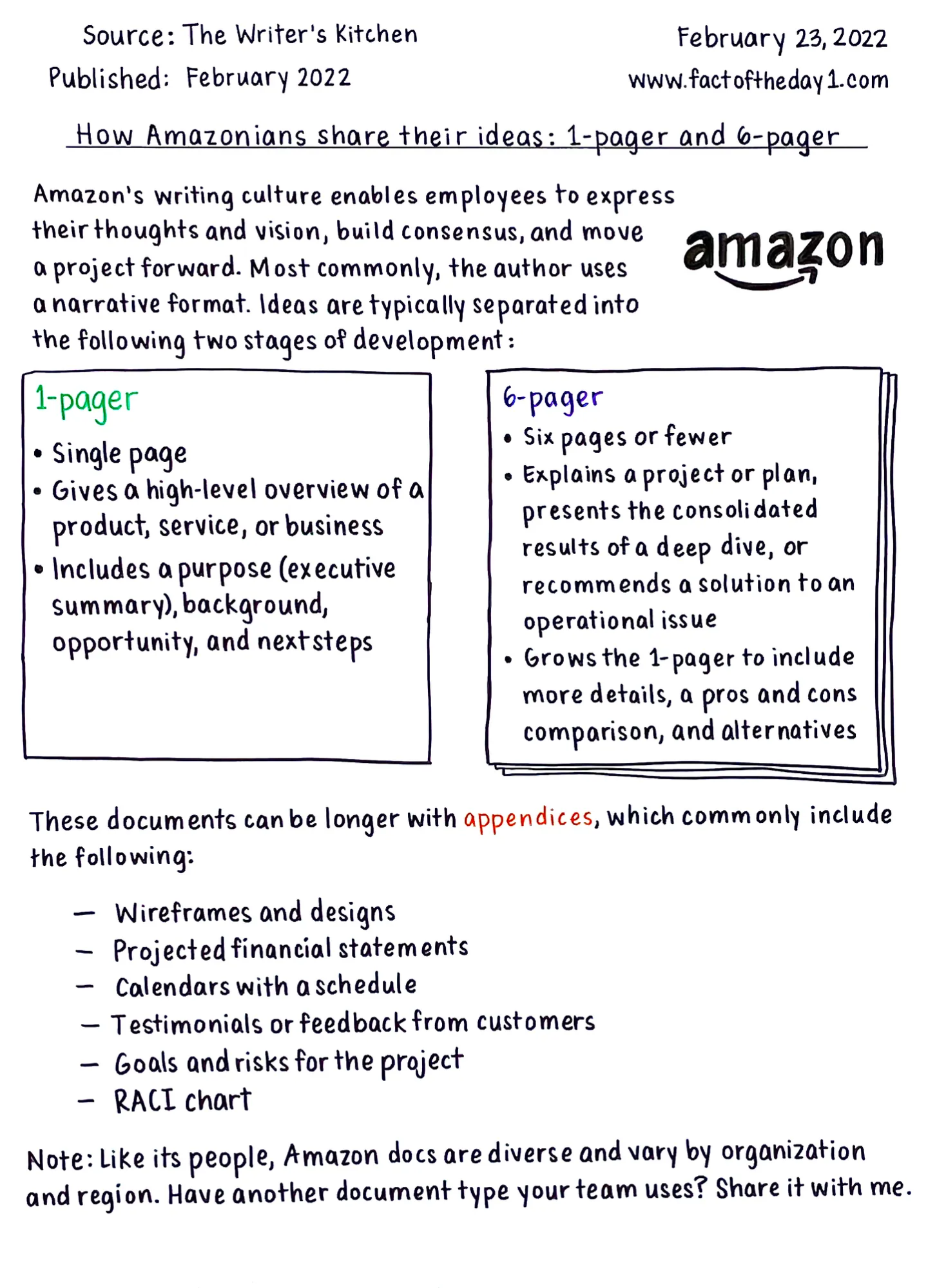
Encouraging engineers to create and maintain architectural diagrams fosters a documentation-first culture. It makes it easier to search for answers, and, in some setups, allows engineers to query systems that support MCP servers (for example, check out IcePanel MCP). A documentation-first culture begins with writing product requirements, ADRs, engineering proposals, and diagramming systems. This approach is similar to Amazon’s 6-pager culture, where new ideas or projects are discussed in short, structured documents. If a proposal isn’t documented, it doesn’t enter discussion. Architecture diagrams serve as valuable references in these 1-pagers and 6-pagers, reducing back-and-forth clarification about the current system and keeping discussions focused on the post-delivery.
Here’s a summary below of Amazon’s writing culture.
Conclusion
Shipping engineering projects requires a clear understanding of a team’s software architecture. Documenting architectures is an indicator of strong engineering collaboration and a documentation-driven culture. It empowers engineers to move quickly from feature idea to implementation, and discuss design trade-offs with a shared understanding of their systems.
Teams that invest time in having architecture diagrams reduce cognitive load, onboard engineers faster, and prevent accidental complexity when making changes. Over time, this leads to more reliable systems and stronger engineering-product collaboration.
To recap, architecture diagrams help engineers:
- Establish a common baseline for discussing systems
- Reduce review time and cognitive load
- Enable asynchronous communication
- Build a documentation-first culture
📚 Resources
- https://www.larksuite.com/en_us/blog/amazon-6-pager
- https://c4model.com
- https://en.wikipedia.org/wiki/Sequence_diagram
- https://en.wikipedia.org/wiki/Activity_diagram
- https://learn.microsoft.com/en-us/devops/deliver/what-is-infrastructure-as-code
- https://developer.hashicorp.com/terraform
- https://docs.aws.amazon.com/cloudformation
- https://en.wikipedia.org/wiki/Model_Context_Protocol
- https://github.com/joelparkerhenderson/architecture-decision-record