
Get in touch

Fill out this form and our team will respond as soon as we can, alternatively email us at mail@icepanel.io.

Pitch

Switch to IcePanel

Software is changing faster than the diagrams that describe it. Here’s the case for documenting architecture in a way that keeps up.

Switch to IcePanel

What’s happening

Your systems now change faster than your documentation

AI tools mean code ships faster than ever. Architecture that once took a quarter to change can now shift within a sprint. But the way most teams document it has not changed: static diagrams are drawn by hand and often become outdated within weeks.

The knowledge that matters ends up scattered across stale wiki pages and a few senior engineers’ heads, just when teams and their AI agents need an accurate picture the most.

Introducing IcePanel

IcePanel is the living map of your architecture

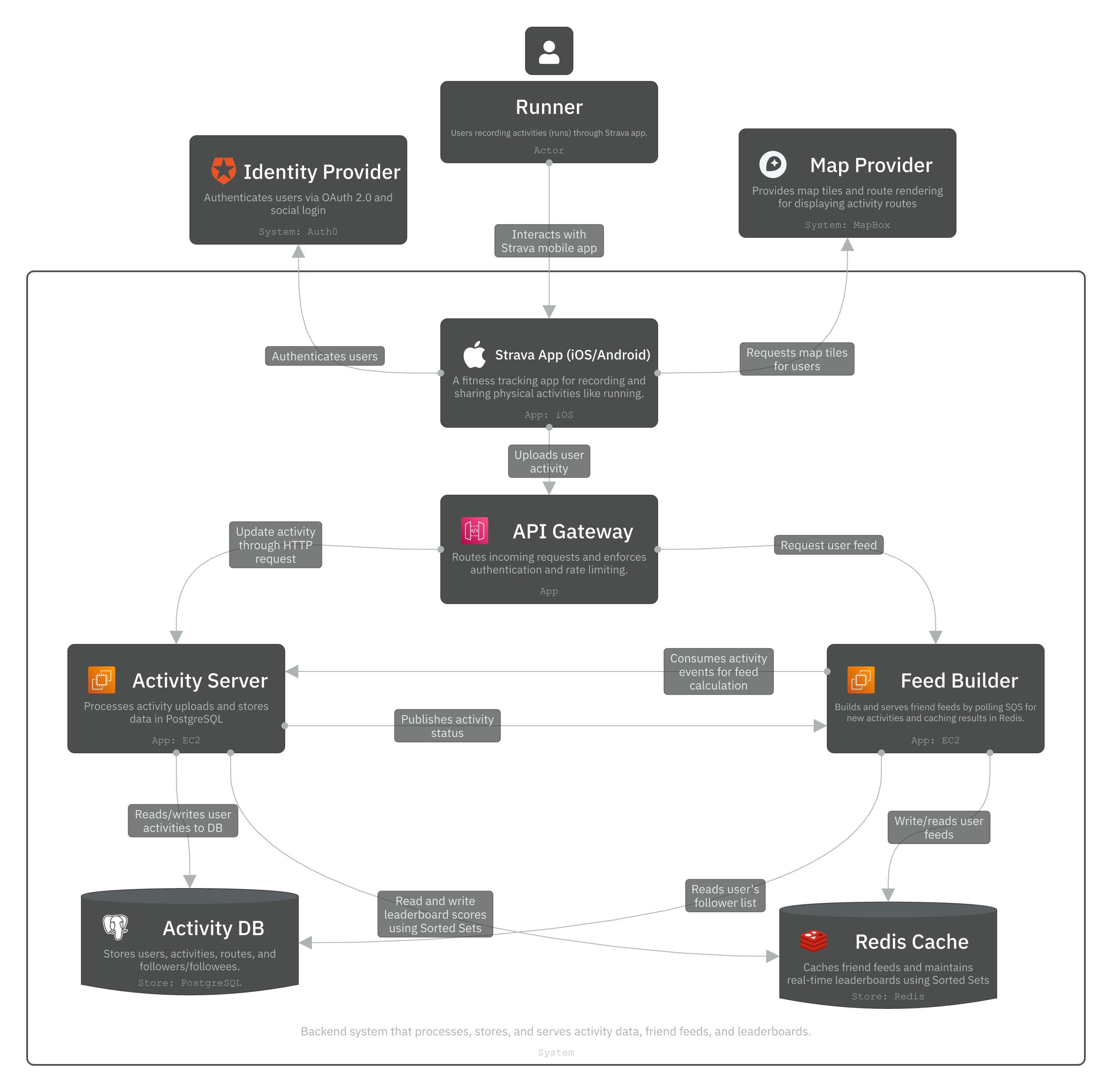
IcePanel organizes your architecture across four levels of detail, giving each audience the right view. Update an object once, and every related diagram syncs automatically. Flag an issue, and it remains visible until it is resolved. Connect IcePanel to your AI tools through MCP, so they can answer architecture questions directly from your model. Or use our API/SDK to keep things in sync with your other tools.

Level 2 - App diagram of Strava modelled in IcePanel

Why switch?

One model, every audience

Stop redrawing the same things for executives, product teams, and engineers. Model it once, then move from a high-level system context down to detailed components. Flows explain use cases step by step, while live embeds bring diagrams into Confluence or Notion, eliminating outdated screenshots.

Governance-focused, Enterprise Ready

Drafts let you propose and approve changes to the as-is architecture. Architecture Decision Records keep a trail of every decision, so everyone (including agents) designs from the same context. IcePanel's team also provides enterprise-grade training and implementation, so you can focus on the modelling, not the rollout.

Agent-ready

Import your landscape from infrastructure code instead of redrawing it by hand. Let developers read and update the model from Claude Code, Cursor, or Codex over MCP. Ownership teams make maintenance a key responsibility, and free viewers mean the whole organization can read the map.

Pitching IcePanel

The status quo

“We already have Lucid, Miro, or draw.io”

Those tools work well for drawing, and the problem is not whether your team can make boxes and arrows. The problem is scale. Without a model behind the diagrams, every copy of an object is a separate drawing: the payment service appears in twelve diagrams, drawn twelve times, and updating all of them is slow and error-prone. IcePanel is a model with diagrams on top. Every system, app, and connection exists once, and every diagram is a view of that shared model. Change an object, and every related diagram updates.

Diagramming without standards leads to inconsistent narratives, where simple questions like "what's the impact of removing this service?" can't be answered in a timely manner. The C4 model brings a clear picture at each level, targeted at a specific audience.

IcePanel is built for architects first. Flows walk any audience through a use case step by step, tags overlay the perspectives that matter (risk, technology, cost, ownership), and drafts let you propose the future state alongside the current one.

The trust problem

“Diagrams always go stale”

Everyone has watched a beautiful diagram become outdated. Six months after the workshop, the wiki page and diagrams no longer reflect reality. Everyone quietly knows it, and nobody trusts the diagrams anymore.

Staleness isn’t inevitable. It happens when a document has no way of showing that it is wrong. IcePanel is built to keep your model up to date. Because everything is based on one model, a fix is one edit that updates every related diagram.

Anyone who spots something wrong can add an inaccuracy comment that remains visible until the issue is resolved. Being wrong becomes a public, fixable state rather than a quiet one.

Larger changes work like pull requests for your architecture. Teams can propose a future state in a draft, review the change list, and merge it once approved. Each merge updates the current state. Turn on auto-versioning, and the landscape also versions itself weekly, so you can always see what changed and when.

The adoption risk

“Our developers will not maintain it”

Developers will not maintain anything that feels like documentation homework, and they can recognize it from a distance.

IcePanel meets developers where they already work. Because it is a modelling tool, one edit syncs to every diagram, flow, and view that references the object. There’s no “update twelve diagrams” task to skip.

Getting started doesn’t mean redrawing everything by hand either. You can generate an import file from your infrastructure code with an LLM and load your landscape in one go with IcePanel’s API/SDK.

Developers who work in Claude Code, Cursor, or Codex can read and update the model over MCP without interacting with a UI. They can bring in critical architecture rules into their agentic development, while pushing updates to the model to keep things in sync. Ownership teams make it clear which team owns each object, so maintenance becomes a clear responsibility instead of a shared assumption.

The enterprise solution

“We already have Sparx or Bizzdesign”

If your organization has an established enterprise architecture practice, those tools are doing a job IcePanel doesn’t: maintaining a full enterprise architecture repository, supporting ArchiMate models, and managing portfolios. You don’t need to replace those (unless you want to).

The problem those tools often don’t solve is reach and depth. The enterprise architecture repository may be precise and complete, but few people outside the EA team use it. Developers are unlikely to log into Sparx to understand how a system works (it’s too hard to use), and product managers may never interact with it.

The knowledge is there, but the audience isn’t.

IcePanel becomes the communication layer on top. Keep your EA tool as the system of record and push data into IcePanel through the API, or connect it with webhooks so changes flow through automatically.

What lands in IcePanel is the version everyone can read: C4 views for every audience, flows for user journeys, and share links embedded where people already work.

Pitching upward

If the person you need to convince owns the budget rather than the codebase, the argument changes. They don’t care about model objects. They care about specific outcomes.

Onboarding time

Every new engineer spends their first weeks reconstructing the system from tribal knowledge, stale wiki pages, and conversations with senior engineers. A trusted, current architecture map reduces that effort, and things like the model viewer give stakeholders a live view rather than an outdated screenshot.

Incident and decision speed

When something breaks or a major technical decision needs to be made, the first hour is often spent establishing what the system looks like. Dependencies, flows, and decision records reduce that delay.

A source of truth when it counts

Audits, compliance reviews, and system design workshops often begin with the same question: show us how the system works. When the answer is scattered across stale wiki pages and people’s heads, the result is weeks of unnecessary work. With IcePanel, everyone starts with the same baseline.

Agent-first approach

IcePanel gives the architectural context to your agents so they have the full picture to iterate and build on top of your existing systems. No more developers building off of inconsistent standards.

Designing the future, not just documenting the present

Drafts let your team design the future state of the architecture alongside the current one, compare proposals, and merge changes once a decision is made. Leadership can see not only where the system is today, but also where it’s going, with the roadmap grounded in the real architecture.

Governance without bureaucracy

Changes move through drafts, review, and approval. Decision records capture why choices were made. Ownership teams communicate responsibility. When an auditor, a new CTO, or someone asks how the architecture evolved and who approved the changes, the history’s already there.

What to do next

The best way to make this case is try it out using your systems with your team.

Run a pilot

Pick one team and one landscape. Model it and use it for a couple of weeks during the free trial. Bring the questions it answered, such as what communicates with what, what changed, and what was flagged, to your next architecture review.

Import what you already have

Generate an import file from your infrastructure code, or explore the interactive templates, including IcePanel’s own architecture, to show your team what good looks like.

Talk to us

Have questions about rollout, security reviews, or training? We run hands-on training workshops, which are included on the Scale plan, and we respond quickly.

Resources

Get in touch

Fill out this form and our team will respond as soon as we can, alternatively email us at mail@icepanel.io.

FAQ

Frequently asked questions

What does it cost to try?

Nothing. The free trial includes all core features and unlimited free viewers.

Do we have to redraw our existing diagrams?

No. Import your model from YAML or JSON. Files generated from infrastructure code with an LLM work well, and our SDK lets you create diagrams programmatically. Redrawing by hand is the fallback, not the plan.

Can we embed diagrams where people already read documentation?

Yes. Sharelinks and embeds keep diagrams live and current in Confluence, Notion, and other tools.

Will this pass our security review?

We are SOC 2 and ISO 27001 certified, with SSO through SAML, audit logs on the Scale plan, and a DPA supporting EU GDPR. We regularly work with procurement, security, and legal teams. Bring us your questionnaire and review process, and we will walk through it with you.

Do you support data residency?

Yes. We offer dedicated instances in the location of your choice, so your architecture data can remain where your compliance team needs it.

Do AI features access our data?

All AI features are opt-in and disabled by default. IcePanel does not train models on customer data.

Is IcePanel for your team?

Try it out for free and see what you think.

Stay chill

Get in touch

Fill out this form and our team will respond as soon as we can, alternatively email us at mail@icepanel.io.